




Understanding how culture shapes the workplace is no longer optional for organizations that want to attract, integrate, and retain diverse talent.
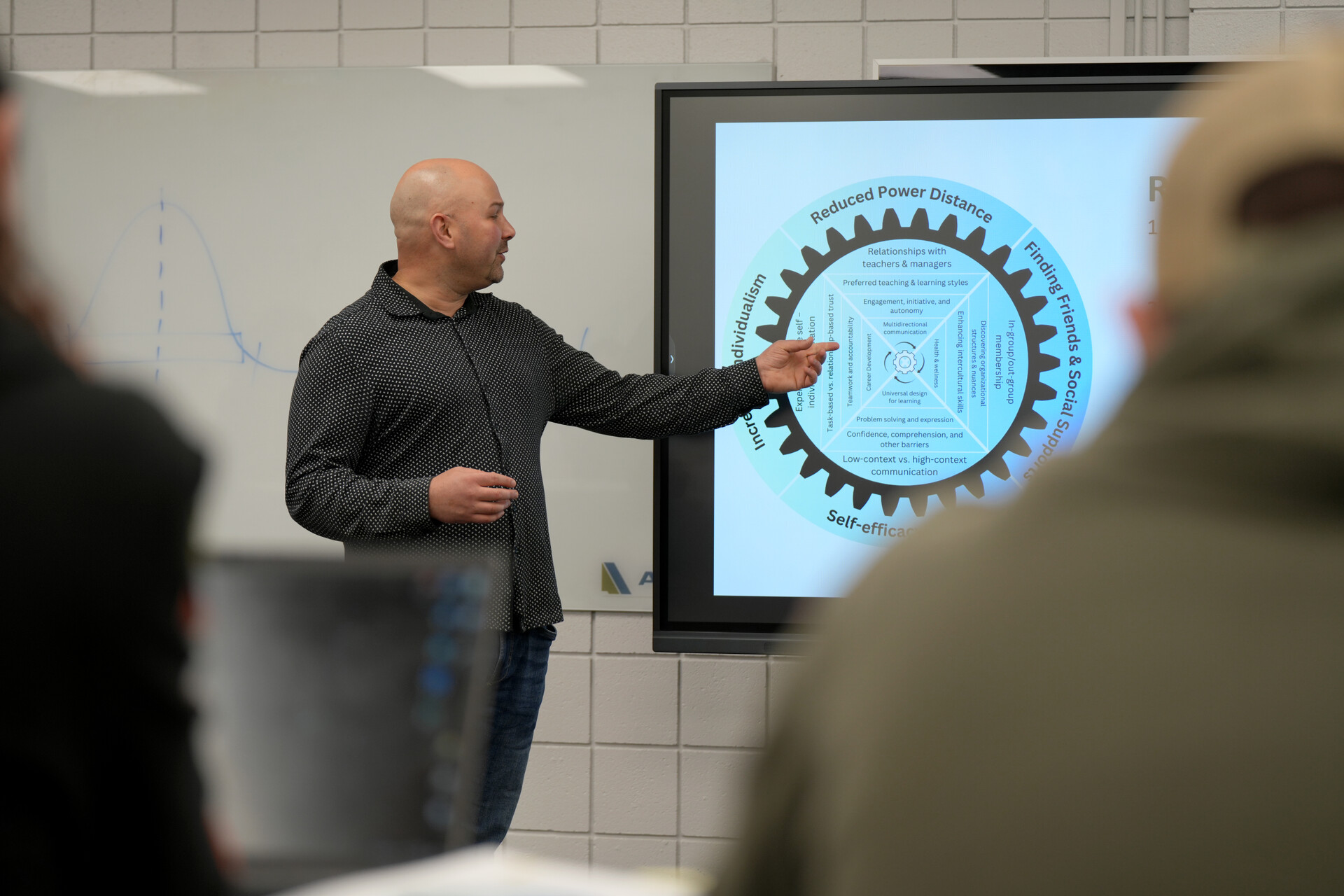
The Axis of Intercultural Discovery and Development is a research-based framework, developed through award-winning graduate research by Brian Rochat and published in the International Journal of Work-Integrated Learning, that helps organizations understand how culture influences workplace behaviour, communication, learning, leadership, and integration. This article introduces the framework and links to the full peer-reviewed paper.
Why Diversity Alone Isn’t Enough
Many organizations successfully recruit employees from diverse cultural backgrounds, yet continue to face challenges with communication, onboarding, engagement, and retention. Diversity creates potential, but that potential is only realized when organizations develop the intercultural intelligence to recognize, understand, and navigate cultural difference. This is the gap the research addresses.
What the Axis Framework Describes
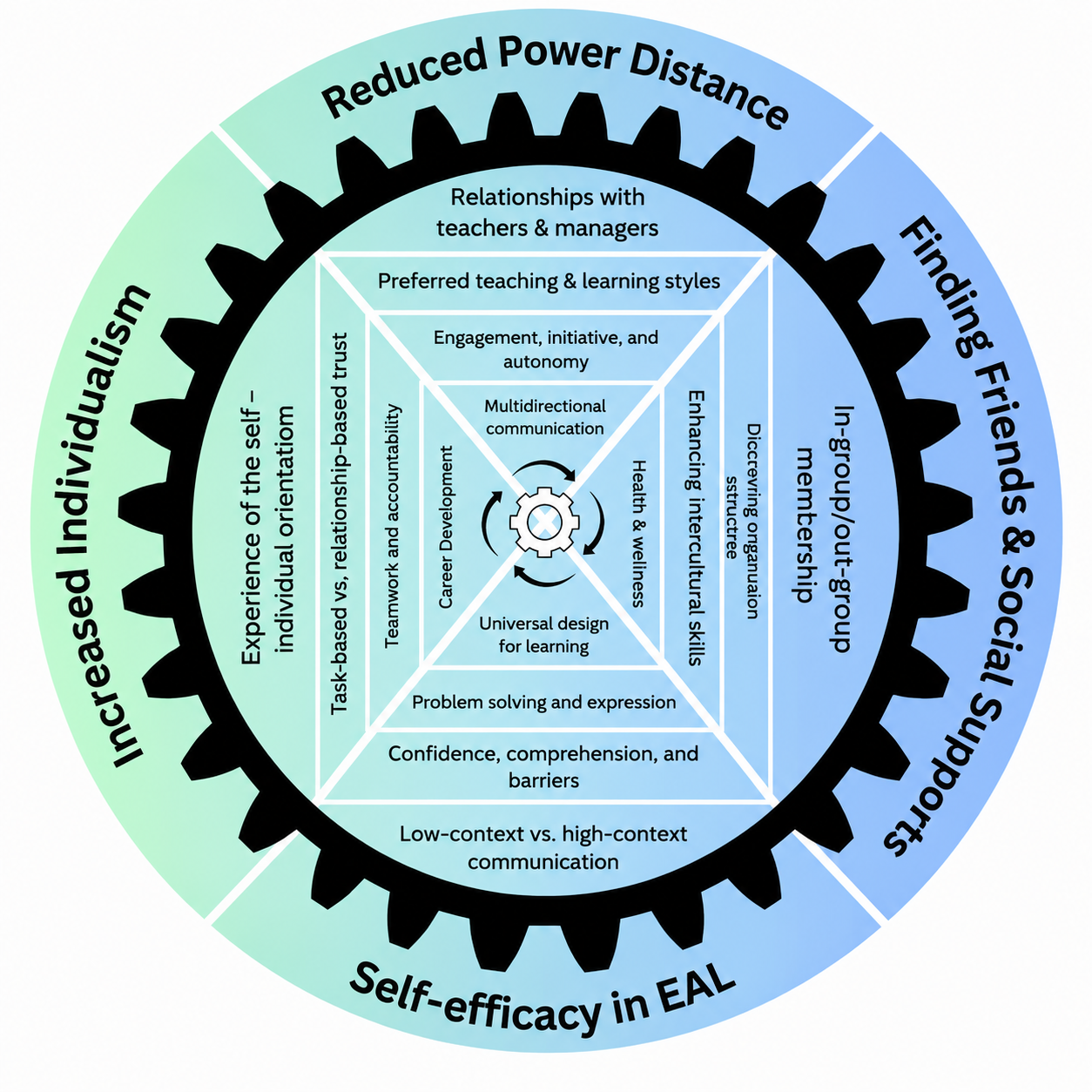
The framework maps four interconnected dimensions that shape how employees experience and adapt to the Western workplace:
Power Distance — expectations around authority, supervision, communication, and decision-making.
Individualism and Collectivism — how people view accountability, teamwork, initiative, and relationships.
Social Supports and Informal Learning — the role of mentorship, networks, friendships, and belonging in workplace success.
Communication and Self-Efficacy — confidence, communication styles, and the ability to navigate workplace interactions.
From Research to Practice
What makes the framework valuable is that it moves from insight to action. It gives organizations a practical lens for understanding workforce integration rather than treating challenges as purely individual issues. The same research underpins Intercultural Advantage Canada’s coaching, workshops, cultural simulations, and organizational audits.